 Arpacılar Home
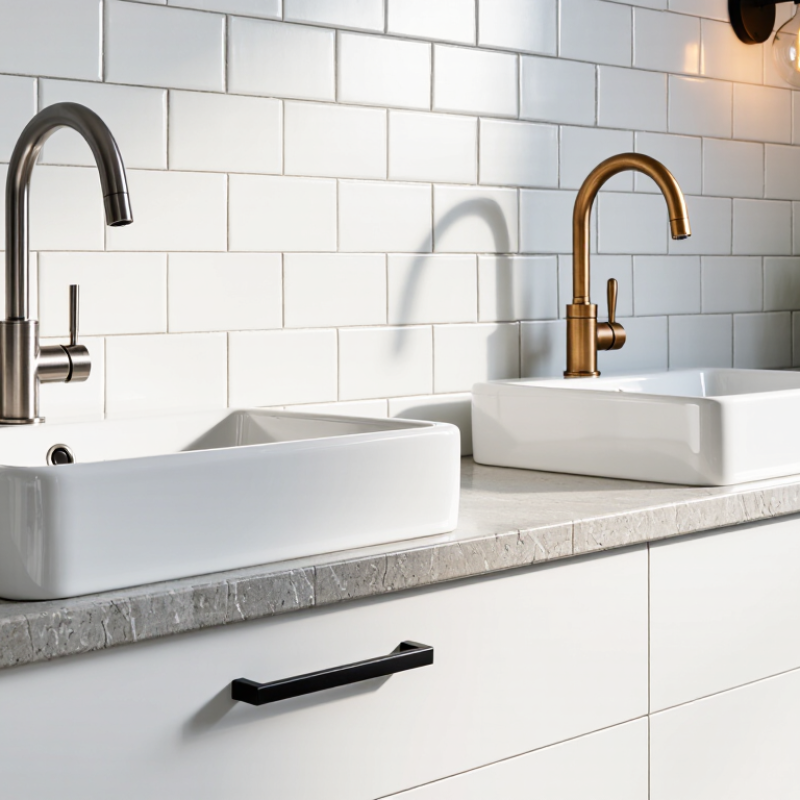
Matching vanity hardware with bathroom faucets starts with the entire room, not a single finish. Study the tile, lighting, mirror frame, shower fittings, and towel bars together. A warm faucet can feel wrong beside cool gray tile and blue-white lighting. A brushed surface often softens that contrast. Measure the vanity drawers before choosing pulls. Two long handles may look balanced, yet collide with adjacent doors. I learned this after a renovation mistake.
Use the faucet shape as a visual reference, not a strict rule. A rounded faucet pairs naturally with curved pulls and softer mirror corners. Angular fixtures suit square knobs and narrow bar handles. However, repeating every shape can make the room feel staged. One controlled contrast adds depth. Keep the metal finishes within a similar visual temperature. Polished surfaces reflect more light and reveal fingerprints. Matte surfaces hide marks, but can appear heavier in a small bathroom. Test samples beside the sink under daytime and evening lighting. Photos can mislead.
Function matters. A pull should offer enough clearance for wet hands. Knobs may challenge children or anyone with limited grip strength. Check mounting holes, screw length, and drawer thickness before ordering. Hardware should resist moisture and clean without abrasive products. Ask an installer to confirm compatibility with the faucet and vanity construction. Their inspection can prevent loose fittings and chipped edges. I still question whether perfect matching is worth losing comfort. A bathroom should feel intentional, not copied. Leave room for that judgment.
