Minimalist cabinetry looks quiet, but its handles do important visual work. A narrow bar can sharpen a flat-front door; a small round knob can soften it. The wrong finish may interrupt an otherwise calm kitchen. And a beautiful handle can still feel awkward when your fingers catch its edge. How to choose the right handles for minimalist cabinets is therefore a practical design question, not just a finishing touch.
The 2024 U.S. Houzz & Home Study reported that median renovation spending reached $24,000 in 2023, up from $22,000 in 2022. That broad home-renovation figure is not specific to cabinet hardware, but it shows why durable, well-considered choices matter. Interior designer Nate Berkus offers a useful, broader design principle: “Your home should tell the story of who you are, and be a collection of what you love.” That idea can guide handle choices without requiring every detail to stand out.
This guide compares handle shapes, materials, finishes, sizes, and placement, with everyday use in mind. Picture brushed brass against warm white doors, or matte black beside pale oak. Then consider the small details: a sharp edge, a loose screw, or fingerprints on a glossy finish. These can change how a kitchen feels. Not every choice will be perfect. Testing a sample on the actual cabinet door is often wiser than trusting a screen or showroom light.
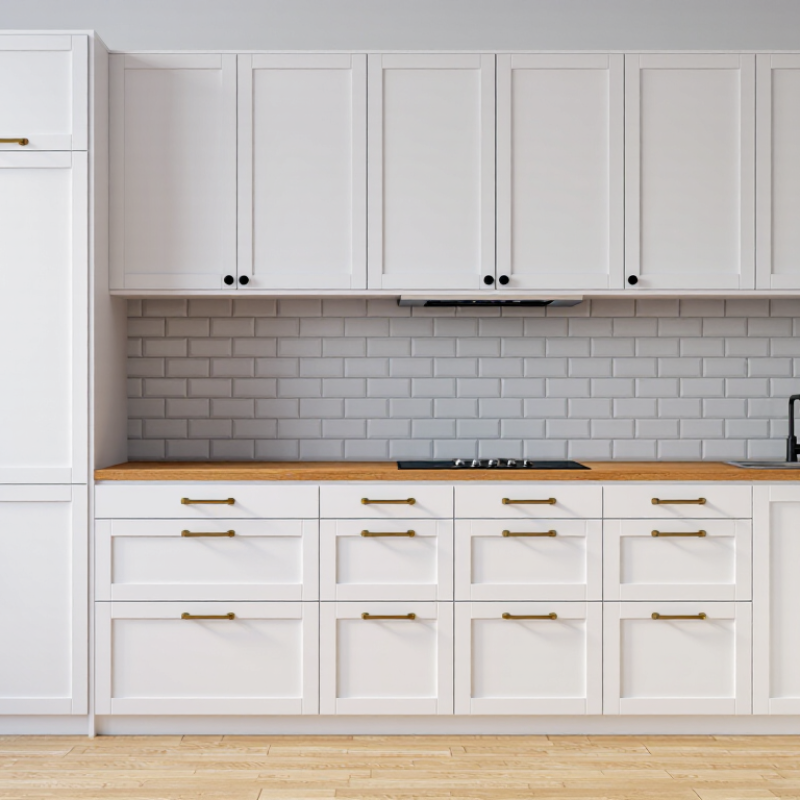
Minimalist cabinet design depends on restraint: flat fronts, quiet finishes, and few visual interruptions. Handles should support daily use without becoming the room’s focal point. Houzz’s 2024 U.S. Houzz & Home Study puts median kitchen-remodel spending at $24,000, underscoring why durable, well-considered details matter. A handle may be small, but it is touched dozens of times each day.
Start with the cabinet layout. Long drawers often suit slim, horizontal pulls; narrow doors may feel better with compact pulls or discreet edge grips. Check clearances around adjacent doors and appliances, then test the grip with wet or soapy hands. Comfort is personal. A sleek bar can look precise in a showroom yet feel sharp at home. That detail is easy to miss.
Finish and proportion matter as much as shape. Matte metal or dark finishes can sit quietly against pale, flat cabinetry, while oversized hardware may disrupt the clean lines. The National Kitchen & Bath Association’s 2024 Kitchen Trends Report documents continuing interest in streamlined, uncluttered spaces; still, minimal does not mean impractical. Compare samples against the actual cabinet finish, and inspect fingerprints under your kitchen lighting. I’d also question the instinct to choose the smallest handle: a subtle profile can become frustrating on a heavy, frequently used drawer.
| Tip | What to Consider | Practical Guidance | Why It Suits Minimalist Cabinets |
|---|---|---|---|
| 1. Match the overall design | Cabinet door style, room finishes, and visual complexity | Choose simple shapes, such as straight bars, slim pulls, or understated knobs. Avoid ornate details if the cabinets have clean, flat fronts. | A restrained shape supports a calm, uncluttered appearance. |
| 2. Select a suitable size | Door or drawer width, available mounting space, and comfortable reach | Measure the cabinet front before choosing a pull. For drawers, a centered pull is a common option; wider drawers may use a longer pull or two evenly spaced pulls. | Well-proportioned hardware looks intentional without overpowering the cabinet face. |
| 3. Check clearance and placement | Door swing, nearby walls, adjacent drawers, and appliance clearances | Use a full-size paper template to test the proposed position. Confirm that doors and drawers open without the handle hitting a wall or neighboring surface. | Thoughtful placement keeps the layout neat and practical. |
| 4. Coordinate the finish | Cabinet color, fixtures, lighting, and other visible metal finishes | Compare finish samples in the room’s natural and artificial light. A coordinated finish can blend in, while a deliberate contrast can create a subtle accent. | A consistent or purposeful finish avoids unnecessary visual distraction. |
| 5. Prioritize comfortable use | Grip shape, projection from the cabinet, and frequency of use | Test the handle with your hand before installation. A pull should provide enough space for fingers, while a knob should be easy to grasp without sharp edges. | Simple design works best when everyday use remains comfortable. |
| 6. Consider material and maintenance | Moisture, cleaning routine, household use, and surface wear | Choose a durable, cleanable material and check care instructions. Frequently touched handles may show fingerprints or wear more readily depending on their finish. | Keeping hardware clean helps preserve the crisp look of minimalist cabinetry. |
| 7. Confirm installation requirements | Hole spacing, screw length, cabinet thickness, and mounting method | Check the handle’s center-to-center measurement and supplied fixing details. Measure existing holes before replacing hardware, and use a template to keep new holes aligned. | Accurate, consistent installation maintains the clean lines that define the design. |
Straight bars or discreet edge pulls pair well with flat, slab-front doors. Simple knobs or narrow pulls often suit shaker doors.
Hold a sample and test it with damp hands. Check for sharp edges and a secure grip. Looks can fool you.
Repeating one shape creates a calmer look. A small variation can work, but too many silhouettes may feel restless.
Compare the handle with the drawer or door. Tiny knobs can disappear on wide drawers, while oversized pulls may crowd narrow doors.
Horizontal pulls are often easy to grip on wide drawers. Vertical pulls can feel natural on tall doors. Test the reach.
Consider nearby appliances and fixtures. Brushed metal can sit comfortably beside stainless surfaces, while dark finishes add contrast to pale cabinets.
Polished surfaces often show fingerprints. Dark coatings may reveal wear along frequently touched edges. Check a sample under your kitchen lighting.
It is safer to inspect a sample at home. View it in morning and evening light; colors can look surprisingly different.
Choosing the right cabinet handles is an important part of creating a clean, balanced minimalist interior. How to choose the right handles for minimalist cabinets begins with considering the cabinet’s style and how it will be used. Simple shapes, such as slim bars or discreet pulls, can complement uncluttered surfaces, while the handle’s size and placement should feel proportionate and make doors and drawers easy to open.
Materials and finishes should work with the cabinetry and surrounding room for a cohesive look without adding unnecessary visual weight. Before deciding, check that each handle feels comfortable to grip, is durable enough for everyday use, and is compatible with the cabinet’s thickness, existing holes, and installation requirements. Thoughtful choices across these details can preserve a minimalist appearance while making the cabinets practical and comfortable.

 Arpacılar Home