Kitchen grease builds slowly, then leaves a dull, sticky film around cabinet handles, stove-side doors, and lower panels. On wood, scrubbing harder is not always better. A strong degreaser, rough sponge, or too much water can cloud varnish, soften paint, or swell seams. The safest method depends on the cabinet’s finish and the grease itself. In many homes, a soft microfiber cloth and a small amount of mild dish soap diluted in warm water are a sensible starting point. Use a barely damp cloth, not a dripping one. Dry each area promptly.
If you are searching for “How to remove grease from wood cabinets without damaging finish,” begin with a hidden spot, such as the inside edge of a door. Wait until it dries and check for color transfer, dullness, or tackiness. Then work in small sections, following the wood grain and rinsing the cloth often. Avoid soaking hinges and joints. For stubborn residue, repeat gentle cleaning rather than pressing harder; old grease may need patience. Still, no method suits every coating, and a test patch is easy to skip when the mess looks small. That can be a mistake. If the finish changes, stop and seek advice from a cabinet-care professional before trying stronger products. This guide outlines practical steps, warning signs, and choices for different cabinet surfaces, so clean doors do not come at the cost of damaged wood.
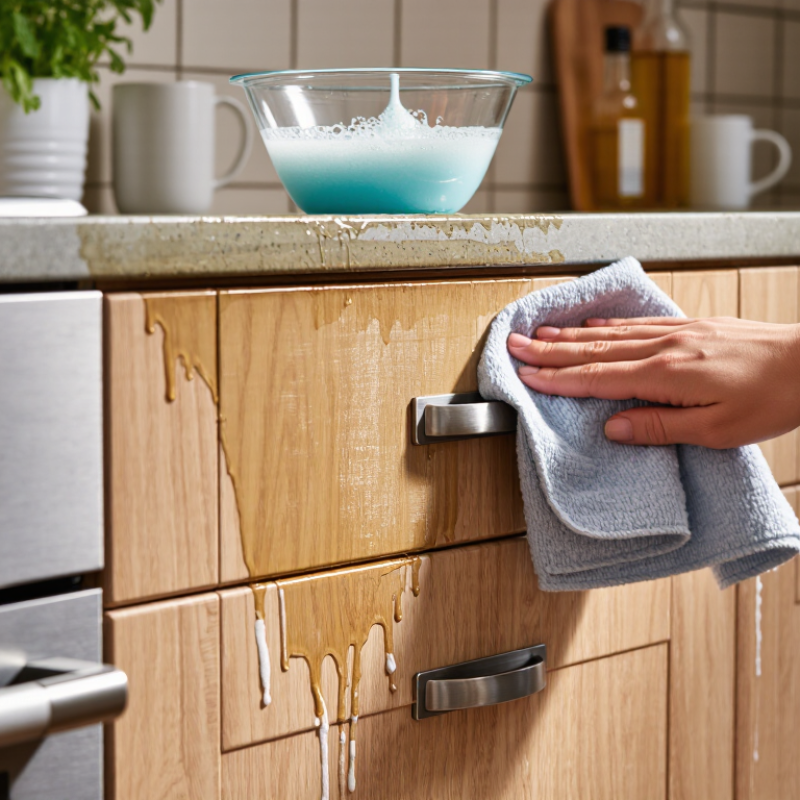
The safest cleaning method depends on the cabinet’s finish and the grease itself. An intact varnish, lacquer, or polyurethane film usually tolerates a lightly damp microfiber cloth better than bare or oil-finished wood. Waxed, cracked, or peeling surfaces are less forgiving. Check a hidden spot first, and let it dry. Do not guess. Fresh cooking splatter often lifts with a little mild dish detergent diluted in warm water. Old, sticky buildup may need several gentle passes; scraping or aggressive solvents can damage the finish. A sticky patch may not even be grease. Old polish or cleaner residue can look similar.
The USDA Forest Products Laboratory’s Wood Handbook (FPL-GTR-282, 2021, Table 4-2) reports wood equilibrium moisture content near 12% at 30°C and 65% relative humidity. That figure describes wood at equilibrium, not a cabinet’s exact response, but it reinforces why repeated wetting is unwise. Wring the cloth until it is barely damp, wipe with the grain, then dry the surface promptly. For oil or wax finishes, follow the finish maker’s care instructions rather than assuming detergent is safe. If the finish turns cloudy, feels tacky, or transfers color during a hidden-spot test, stop and reassess before cleaning the whole door.
Before cleaning greasy wood cabinets, gather a soft microfiber cloth, a non-scratch sponge, and two small bowls. Fill one bowl with warm water and add a few drops of mild dish soap. Keep plain water in the second bowl for rinsing. Less soap is usually better; a sticky film can remain if the mixture is too strong.
Clear the counter and move nearby food, appliances, and utensils away from the work area. Lay an old towel beneath the cabinets to catch drips, and keep a dry cloth within reach. Good lighting helps reveal greasy patches, especially around handles and above the stove. Open a window if the room feels stuffy. Small details matter.
Check the cabinet care instructions if available, then test the soapy solution on a hidden spot. Wait until the wood dries before judging the finish. This step can feel overly cautious, but finishes vary, and water can mark some surfaces. Avoid steel wool, rough scouring pads, and soaking-wet cloths. I would not assume every cabinet tolerates the same cleaner; that assumption is easy to make, and not always harmless.
China Best Way to Remove Grease from Wood Cabinets Safely?
Test a Mild Cleaner on a Hidden Area
Before cleaning the whole cabinet, test your solution on an unseen spot, such as the lower inside edge of a door. Mix a few drops of mild dish soap into warm water, then dampen—not soak—a soft cloth. Wipe a small patch and let it dry fully. Check for color transfer, a cloudy finish, tackiness, or raised wood grain. If anything changes, stop. A test can feel overly cautious, but finishes vary, even on cabinets that look alike.
If the finish stays unchanged, work on a small greasy area with gentle strokes. Follow with a clean, barely damp cloth, then dry the surface promptly. Avoid abrasive pads and harsh degreasers unless the cabinet-care instructions specifically allow them. The U.S. Environmental Protection Agency reports that indoor levels of many volatile organic compounds average two to five times outdoor levels. That figure is not specific to cabinet cleaners, but it supports using products sparingly and ventilating the room while you clean.
Tips: Test the cloth, too: use white fabric to spot color pickup. Keep water away from seams and exposed edges. If grease remains, repeat gently rather than scrubbing harder. A little residue may need another pass.
Grease on wood cabinets is best removed in light passes, not with a soaked cloth or harsh scrub. The USDA Forest Products Laboratory’s Wood Handbook reports that wood’s fiber saturation point is typically about 25–30% moisture content. This is a technical property, not a safe cleaning limit; it does show why prolonged wetting can be risky, especially at joints and exposed edges. Slow down. Test your cleaning method on a hidden spot, since finishes vary and a patch test can reveal dulling or color transfer.
Use a soft microfiber cloth with warm water and a few drops of mild dish soap. Wring it out until barely damp, then wipe a small greasy area gently. Give the cleaner a little time to loosen the film, rather than pressing harder. It is easy to overdo the first pass. Rinse soap residue with a second, clean, barely damp cloth, then dry the surface promptly with a towel. Repeat if needed. Avoid abrasive pads, steam, and strong solvents, which may scratch or soften the finish. For stubborn buildup, make another gentle pass instead of flooding the cabinet.
Suggested time per cleaning step (minutes). This is a practical time guide, not measured grease-removal data.
Start with the least aggressive method: dust, then gently wipe with a soft cloth dampened with mild dish soap and water. Use minimal moisture, test an inconspicuous area first, follow the cabinet maker’s care instructions, and dry the surface promptly.
After lifting grease from wood cabinets, wipe away cleaner and loosened residue with a fresh, damp microfiber cloth. Rinse the cloth often so you do not spread oily film across the doors. Less water is safer. Standing moisture can seep into joints or dull some finishes, so keep the cloth damp rather than wet.
Dry each surface right away with a soft, clean towel, following the direction of the wood grain. Pay attention to edges, handles, and the narrow seams around cabinet panels. These spots often hold water or greasy cleaner. If a cloudy patch remains, pause and check the product instructions or test a mild cleaning solution in a hidden area. Scrubbing harder may damage the finish.
Once the cabinets are fully dry, inspect them in side light. A slightly tacky feel can mean residue is still present; wipe that area again with a clean, lightly damp cloth, then dry it. That matters. Avoid applying polish or protective products until the surface is clean and dry, and choose only products suitable for the cabinet’s existing finish. I have found that rushing this last step can leave streaks, even when the grease is gone. If the finish looks worn or discolored, stop cleaning and seek advice from a cabinet-care professional.
Intact varnish, lacquer, or polyurethane often tolerates a barely damp cloth. Waxed, cracked, peeling, or bare wood needs extra caution. Check care instructions when unsure.
Mix a few drops of mild dish soap into warm water. Avoid assuming it suits oil- or wax-finished wood.
Dab a hidden spot, such as a door’s lower inside edge. Let it dry fully. Check for cloudiness, tackiness, raised grain, or color transfer. Stop if anything changes.
Wring it until barely damp. Keep water away from seams and exposed edges. Less water is safer.
Wipe a small area with the grain and light strokes. Rinse with a clean, barely damp cloth, then dry promptly.
Let the mild cleaner loosen the film, then repeat gently. A second pass may help. Scrubbing harder can damage the finish.
Avoid them unless the cabinet-care instructions specifically allow them. They may scratch or soften the finish.
It may be old polish or cleaner residue instead. The cause can be hard to judge. Test gently before treating the whole cabinet.
Removing grease from wood cabinets safely begins with identifying the cabinet’s finish and considering how heavy or sticky the grease is. Choose gentle supplies, such as a soft cloth and a mild cleaning solution, and protect the surrounding work area from drips. Before cleaning a visible surface, test the solution on a small, hidden spot and check that the finish does not change.
For How to remove grease from wood cabinets without damaging finish, work gradually: use a lightly dampened cloth, wipe with the grain, and avoid soaking the wood or scrubbing aggressively. Repeat gently as needed rather than applying stronger cleaners right away. Once the grease is gone, wipe away any cleaner residue with a clean, damp cloth, then dry the cabinets thoroughly with a soft towel. Careful cleaning and prompt drying help preserve the finish and keep the cabinets looking their best.