Planning a kitchen upgrade in 2026 often begins with one practical question: What is the average cost of semi-custom cabinets? The answer is rarely a single number. Most homeowners should expect approximately $150 to $700 per linear foot, excluding installation, countertops, appliances, and major plumbing changes. A medium-sized kitchen may therefore cost $12,000 to $30,000, depending on layout and materials.
Paul McAlary, president of Main Line Kitchen Design and a recognized cabinet-industry consultant, has explained, “The price of a cabinet is not necessarily indicative of the quality of the cabinet.” That warning matters. A maple door, soft-close drawer, plywood box, and custom paint can raise the estimate quickly. Meanwhile, a simpler thermofoil finish may reduce the initial price but offer different durability and repair considerations.
Real projects rarely follow showroom labels perfectly. A contractor may charge separately for fillers, crown molding, panels, delivery, and removal of old cabinets. Small details become expensive. A six-inch filler can affect an entire wall’s design. Installation quality also matters, because uneven floors or walls can create extra labor.
This guide compares the best semi-custom cabinet choices for 2026, including construction, finishes, storage features, warranties, and installation value. Prices can change by region and supplier. Even careful estimates may miss something. That is why homeowners should request itemized quotes, confirm measurements, and leave room for unexpected adjustments before signing a contract.
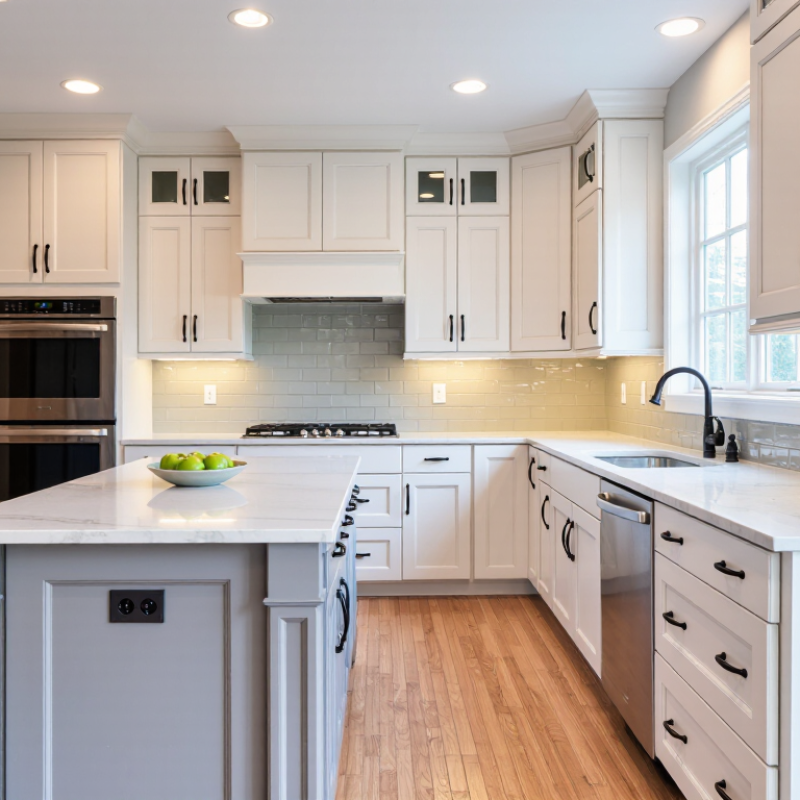
Semi-custom cabinets sit between stock and fully custom cabinetry. Their boxes usually come in standard sizes, but homeowners can select door profiles, finishes, hardware, drawer layouts, and interior organizers. Some suppliers also adjust cabinet widths or heights within a limited range. That flexibility helps fit a 10-by-12-foot kitchen without paying for every part to be individually built.
The National Kitchen & Bath Association identifies storage efficiency, deep drawers, and tall cabinets as continuing kitchen priorities in its 2024 design trends reporting. Those features often make semi-custom cabinets practical for real homes. They can add recycling pullouts, tray dividers, soft-close drawers, and pantry storage without requiring a completely custom plan. Still, “semi-custom” is not a precise industry standard. Specifications vary widely between manufacturers, and that creates confusion.
For cost planning, the 2024 Houzz & Home Study reported a median U.S. spend of $20,000 for a minor kitchen remodel and $75,000 for a major remodel. Cabinets consume only part of those budgets. A semi-custom cabinet package may commonly fall around $15,000 to $30,000, depending on size, materials, accessories, delivery, and installation. That range is useful, but imperfect. I have seen installation details change the final invoice sharply. Wall conditions, fillers, trim, and rushed revisions are easy to underestimate. Get an itemized quote before comparing cabinet prices.
Semi-custom cabinets combine standard cabinet construction with a broader selection of sizes, finishes, storage features, and design options.
| Cost Dimension | Typical Range | Average Planning Figure | What the Price Usually Includes | Common Cost Factors |
|---|---|---|---|---|
| Cabinet boxes and doors only | $150–$650 per linear foot | $300–$450 per linear foot | Cabinet boxes, doors, drawer fronts, standard hinges, and basic interior shelving | Material, construction method, door style, finish, and cabinet depth |
| Small kitchen cabinet package Approximately 10–15 linear feet |
$3,000–$8,000 | $5,000–$6,500 | A limited cabinet layout with standard wall, base, and specialty cabinets | Kitchen size, number of drawers, corner solutions, and decorative end panels |
| Medium kitchen cabinet package Approximately 20–25 linear feet |
$6,000–$16,000 | $10,000–$12,500 | A typical kitchen layout with upper cabinets, base cabinets, and selected organizers | Island configuration, tall pantry cabinets, finish upgrades, and interior accessories |
| Large kitchen cabinet package Approximately 30–40 linear feet |
$9,000–$26,000 | $15,000–$20,000 | A larger layout with multiple cabinet types, extended storage, and more finishing components | Cabinet quantity, oversized units, glass doors, panels, fillers, and molding |
| Professional installation | $50–$120 per cabinet unit | $2,000–$6,000 per kitchen | Cabinet assembly, leveling, fastening, scribing, and installation of trim components | Local labor rates, wall conditions, cabinet count, demolition, and layout complexity |
| Removal and disposal of existing cabinets | $500–$2,500 | $1,000–$1,500 | Removal of old cabinetry and ordinary job-site disposal | Cabinet construction, accessibility, disposal fees, and whether countertops must be removed |
| Freight and delivery | $250–$1,500 | $500–$900 | Transportation from the distribution point to the project location | Order size, delivery distance, lift-gate requirements, and regional shipping rates |
| Storage accessories | $100–$1,500 per feature | $300–$800 per feature | Pull-out waste bins, tray dividers, drawer organizers, lazy susans, and pantry pull-outs | Hardware quality, mechanism type, cabinet dimensions, and weight capacity |
| Decorative upgrades | $50–$1,500 per item | $300–$800 per kitchen | Crown molding, light rails, furniture-style feet, finished ends, and glass door inserts | Amount of trim, installation labor, glass selection, and finish matching |
| Typical complete project Cabinets, delivery, and installation |
$12,000–$30,000 | $18,000–$22,000 | A medium-sized kitchen with semi-custom cabinets, standard installation, and moderate accessories | Cabinet volume, labor market, layout changes, finish level, and selected options |
Planning note: These are estimated 2026 U.S. market ranges for semi-custom cabinetry. Prices generally exclude countertops, appliances, plumbing, electrical work, flooring, permits, taxes, and major structural changes. Actual estimates vary by region, project size, materials, and installation requirements.
Semi-custom cabinets use standard cabinet boxes with selected doors, finishes, hardware, and storage features. They offer more choice than stock cabinets. Less than fully custom.
Yes. Limited width and height adjustments can help fit a 10-by-12-foot kitchen. Accurate measurements remain essential. Small errors matter.
Options may include deep drawers, tall pantry units, recycling pullouts, tray dividers, and soft-close drawers. Check the exact specifications before ordering.
A cabinet package may cost about $15,000 to $30,000. Cabinet pricing can range from $150 to $650 per linear foot. These figures are only planning guides.
Include boxes, doors, fillers, finished panels, hardware, delivery, demolition, installation, taxes, and countertops. Visible cabinets are only part of the cost.
Keep 15% to 20% aside for unexpected work. Uneven walls, damaged flooring, extra trim, and revised measurements can increase the final invoice.
Request an itemized quote from each contractor. Compare matching materials, storage features, panels, installation, delivery, and excluded services. The lowest total may not be comparable.
Measure wall lengths, ceiling height, appliance openings, windows, doors, and plumbing points twice. I might still miss something. A professional check can prevent expensive revisions.
Not always. Pull-out storage, tall units, finishing panels, and complex layouts can raise costs quickly. A cheaper layout may waste valuable storage space.
Semi-custom cabinets offer a practical balance between stock and fully custom options. They are produced in standard sizes but allow homeowners to choose from more finishes, door styles, colors, storage features, and limited size adjustments. What is the average cost of semi-custom cabinets in 2026? In general, homeowners may expect to spend approximately $150 to $700 per linear foot for cabinets, while a complete kitchen project can range from about $8,000 to $25,000 or more, depending on the design and installation requirements.
Several factors influence the final price, including cabinet materials, construction quality, finishes, hardware, layout complexity, accessories, delivery, and labor. Semi-custom cabinets usually cost more than stock cabinets but less than fully custom cabinetry, making them suitable for homeowners seeking personalization without an unlimited budget. To plan effectively, measure the space carefully, define must-have features, request detailed estimates, reserve funds for installation and unexpected adjustments, and compare options based on long-term value rather than appearance alone.

 Arpacılar Home